Latest News

Monthly Blog

Last Years Blogs


Walking the Ridgeway in 2009

The Ridgeway connects most of the villages I have lived in and it has always been an ambition of mine to walk the 85 miles or so of this ancient track.

The National Trail guide has split the route into 12 segments which average about 5-12 miles each. My partner and I decided to walk each month along this road and we started in January 2009.

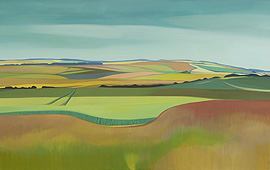
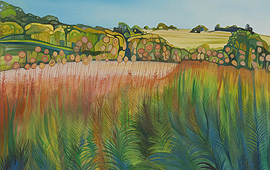
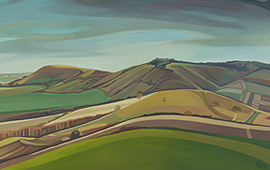
Now that I have walked the length and breadth of this fabulous route I have been inspired to paint a series of landscapes gathered from photos I took along the way. I hope to exhibit these in a solo exhibition sometime in 2012.

JANUARY: PART 1: OVERTON HILL TO OGBOURNE ST GEORGE

We walked from the official starting point of the Ridgeway National Trail at Overton Hill and ended our walk at Ogbourne St George – this is about 10 miles.

We were very luck with the weather that day but the going was tough due to heavy rains and storms the night before. By the end of the walk I was very tired and ached for about 3 days but really enjoyed the views and locations we saw. I am hoping that all of the reference photos I gain from this walk will go towards another exhibition of paintings about The Ridgeway at a later date

FEBRUARY: PART 2: OVERTON HILL TO OGBOURNE ST GEORGE

The heavy snow for the first two weeks proved dramatic for the 2nd stage of our walk along The Ridgeway. In places the snow was 4 feet deep and made progress painfully slow but equally appealing as the landscape looked beautiful.

MARCH: PART 3: FOX HILL to UFFINGTON WHITE HORSE

The easiest part of The Ridgeway walk by far, basically because we had perfect weather conditions under foot and also because once we’d walked up Fox Hill the Ridgeway levels out in a flat path for most of the 5.5 miles to Uffington.

APRIL: PART 4: UFFINGTON WHITE HORSE to WANTAGE

Easter Monday - The best leg of the Ridgeway by far in my opinion. Hot and unusual spring weather and magnificent landscapes and landmarks – many of which I’d never seen before despite living so near all my life. From Uffington White Horse the track takes a gradual decline downhill and then levels off for a short while. The real surprise for me on this journey was The Devils Punchbowl which sits above Letcombe Basset. The dramatic sweep of this ancient glacial bowl has carved out a large and fertile valley which is completely hidden from any main roads. After leaving this behind we came across Segsbury Camp – an old and large iron age hill fort. At this point the Ridegeway crosses a main road to Wantage – we could have stopped here but decided to continue for another 1.5 miles before ending this leg of our walk.

MAY: PART 5: WANTAGE to ASTON TIRROLD

At the end of this journey we could hardly walk from fatigue and worked out, post walk, that we’d completed about 11.5 miles. From just outside of Wantage we quickly came across the monument to Baron Wantage. Onwards to the Hendred Downs we were informed that there was a large ‘rave’ going on which we ended up walking through as it was literally right on the track. Lots of sound systems, buses, booze and entertainment and quite a few police cars patrolling the area as well.

From just past the top of Scutchamer Knob you get a great view of Harwell’s famous Rutherford Laboratories with Wittenham Clumps in the distance. The noise of the A34 starts to impose on the sounds of sky larks. The Ridgeway took us under the A34 and then the land really started to open up on the Compton Downs. There are lots of racing gallops here and we could just about make out Blewburton Hill in the distance.

Before long we’d stopped for a break on the small brick bridge of the now disused Didcot, Newbury to Southampton junction railroad. The track was busy on this day with cars, mountain bikers and plenty of solo walkers. Again we could not have picked a better day for this walk, weather wise and the water we’d take with us was beginning to run short. The track starts to climb up the back of the Blewbury Downs and after a while we spotted Lowbury Hill and decided to leave the Ridgeway and head down to our home village, Aston Tirrold which was about 1.2 miles away. A lovely section of the Ridgeway.

JUNE: PART 6: ASTON TIRROLD TO STREATLEY

Getting back to where we left the Ridgeway in May meant a two mile walk from the heart of Aston Tirrold up the Downs. Funny how the landcape had changed so much in one month...

From a green and lush May the fields were now turning to corn and the poppies and flowers were out in full bloom. Once we got to the Ridgeway we enjoyed a pleasant walk across open farm land and then a lovely view opened up called Streatley Warren. This was an unexpected surprise for me and definitely provided me with yet another view to work up into a landscape. We saw lots of Red Kites on this walk and another large hare.

After walking down to the farms and houses at the base of the warren through a shaded tree lined segment, the track turns into a tarmaced road and for the next 1.9 miles we enjoyed looking at all the pleasant houses and cottages at the side of the road before reaching our destination point at the A417.

JULY: PART 7: STREATLEY TO WALLINGFORD

Picking up the exact spot where we left off at the Golf Course in Streatley we started part 7 of our walking trip. The first part of this took us through Streatley, down the hill and over the River Thames. At this point, Streatley ends and Goring on Thames starts. Just up the road is the gallery I sell my work in regularly, Art@Goring and I do recommend to other walkers doing this trip to pop in and see their gallery.

I’m pretty familiar with Goring and Streatley but had never walked along the river from this side. Goring and Streatley regatta was in full swing on our left and to our right is the main Didcot to London train route which slightly interrupts the peacefulness of the walk.

Leaving Goring, The Ridgeway opens up into pleasant riverside meadows and what follows is a delightful amble through the villages of South and North Stoke. There is also the famous Victorian viaduct that runs in between the parishes of these two villages which was built by Brunel and has twisted brick arches and is well worth a look. Most books I have read also state that it’s common to see large congregations of Canadian Geese and we were not disappointed.

Don't forget to visit The Church of St. Mary in North Stoke to see the beautiful 14th Century wall paintings, ancient oak pews and a brick floor.

The rest of this stretch of the walk took us away from the river banks and along some nice corn fileds with views of The Chilterns in the background. We left the path to head into Wallingford at this point.

AUGUST: PART 8: WALLINGFORD TO NUFFIELD

I often think that during late summer the countryside looks battered and dishevelled. All the grass is parched and the fields have just been cut. Today’s walk looked slightly autumnal with grey skies and mist but the humidity was very high.

We started this leg of our walk where we had left it - on the busy A4130 (the Wallingford Bypass) - where the Ridgeway becomes a single track that hugs the side of the road. Once we crossed the fast moving A4074 the sound of the roads behind us quickly disappeared and the path meandered gently uphill with pleasant countryside views on either side.

For the next five miles the Ridgeway follows Grims Ditch which is believed to be a man made boundary between different territories which may date back to Iron Age.

A variety of trees from Ashes to Beeches line the track and at the start, our path stetched out over the ridge of the bank which later become a large and clearly visible ditch.

Mongewell Woods was dark and dense and we’re pretty sure there was deer nearby.

The walk turned out to be an unexpected pleasure due to the peace and tranquillity (we hardly saw another person along this stretch). Along the way we also saw quite a few badger sets (old and recent), long tailed tits, plenty of red kites and a large wasp nest in the ground.

Once we left the ditch and turned towards Nuffield Village we got some really sweeping views over the Thames valley, including Wittenham Clumps and Didcot PowerStation – two landmarks that have featured prominently on this part of the Ridgeway Walk. The final part of the walk took us through the grounds of a local Golf Club and then finally out into Nuffield Village and past an old Church (the Holy Trinity Church) that was built on the sight of an old Roman Village and is definitely worth a quick look inside if you are passing.

Due to a few leg injuries from both of us we could only go as far as Nuffield so we have now fallen slightly with our schedule and will need to make up extra time in October and November by doing three or four walks.

SEPTEMBER: PART 9: NUFFIELD TO CHINNOR

An early start for this 12 mile walk. At 9:30 the morning mist was starting to clear as we trekked across large and open ploughed fields just past Nuffield. The open fields were divided by dense sections of woodland (must be lovely in Spring but Autumn was also magnificent) with ample shade and nobody around. There are a couple of very attractive houses along this part which have huge amounts of private estate land surrounding them and the church at Swyncombe is worth a look inside but there was a service going on when we passed by.

There are some pretty ferocious hill climbs after Swncombe but then the Ridgeway finally levels out as it follows the foothills of the Chilterns very closely. Watlington comes into view and then we heard the distant hum of the M40 which gradually became visible.

After a short break for sandwiches we crossed under the motorway and enjoyed the quiet of the wooded Chiltern Hills to our right, along with the red kites in the sky.

Eventually we got to the large chalk pits near Chinnor which, at the time of passing, was heavily flanked by security gates and guards. At this point we left the path and headed into the centre of Chinnor, exhausted, hot but happy.

OCTOBER: PART 10: CHINNOR TO LOWER CADSDEN

The elements were slightly against us during this leg of our walk due to pretty strong winds and flurries of rain at the start. Walking through the outskirts of Chinnor the track becomes lined with beech trees in wonderful colours of yellow and orange and as we shuffled through the fallen leaves the Ridgeway takes a surprising sharp turn right into a large, expansive and attractive piece of downland called Wain Hill.

The track steadily climbs up and on to Lodge Hill where the track becomes fine, velvet grass that is clearly a good grazing places for rabbits. The views from up here are spectacular with a 360 degree panoramic of the Chilterns. As we descended down the hill we could see Princes Risborough come into view. We crossed the rail track here and then a golf course before meeting the busy A4010 road. We followed this very fast and noisy road to the outskirts of town and were relieved when we turned right away from the main road. The track clips the edges of town and is also part of the Icknield Way. Lots of red kites could be seen in the sky above us and at the same time the weather improved considerably with the skies clearing and the warm sun forcing us to take off all our rain coats.

As Whiteleaf cross came into view we started a pretty severe climb up the hill here. By the time we both got to the top we were exhausted but the views are well worth the climb.

Sheep graze the hill at the top here and there is a nice bench to rest weary legs. The track at the top of the hill becomes pleasant woodland and then we were greeted with a second vista directly above Whiteleaf Cross. The last half mile took us back into the woodland and downhill to Lower Cadsden where there is a lovely pub called The Plough. A great stop for refreshments.

NOVEMBER: PART 11: LOWER CADSDEN TO WIGGINGTON

Back at Lower Cadsden, off the main road, the Ridgeway cuts through the back of some cottages and then opens up at the base of downland and Pulpit Hill which is an Iron Age Hill Fort. We had an 11 mile walk ahead of us so we couldn’t explore the top of the hill at this point.

Chequers (the official Prime Ministers country residence) came into view with the Combe Hill Monument in the distance behind the house which is 16th Century and very grand. The Ridgeway cuts through the end of the grounds of this house and offers a really special vantage point for walkers.

There is a meandering and steady climb through really pleasant woodland that embraces the Chequers Estate and heads up to Lodge Hill. Suddenly, as we reached the top and headed out of the woodland, we were treated to huge panoramas of Aylesbury Vale and Wendover. It was such a clear day we could even see Didcot Power Station in the distance.

After admiring the huge monument, dedicated to local men killed in the Boer War, we headed downhill towards the small and attractive market town of Wendover.

The next stretch of track from Wendover to Tring Park (apart from the initial climb from Wendover) is a pleasant and relatively straight walk through woodland. Tring Park (part of the Rothschild Estate) is stunning with huge avenues of Beech, Lime and Yew. Wearily we got to Widdington, a small and pretty village where we had parked our car. Dry, despite a wet November but in need of a cuppa.

DECEMBER: PART 12: WIGGINGTON TO IVINGHOE BEACON

The last leg of my Ridgeway Walk during 2009 took place on New Years Eve on a relatively decent weather day (the previous week had given us heavy snow and the week following delivered even more snow). The Ridgeway cut through the edge of Wiggington and the track up on the hills here was still covered in snow in parts.

We crossed over the busy A41 and headed towards the Grand Union Canal. After crossing this river we passed Tring Station and the busy London Mainline.

The track follows the main road for a small time before we turned left and headed uphill and towards Aldbury. This whole area is part of the Aldbury Nowers Nature Reserve which is owned by the National Trust. The weather started to clear and we got some great views over the Aylesbury Vale. Quite a lot of this part is woodland with old beech and oak trees lining our way.

Part of another Grims Ditch took us along and over Pitstone Hill and towards Brook Statnalls Wood. We could see some chalk pits below us and the wind and cold added to a very chilly part of the walk. At the top of this ridge Ivinghoe Beacon came into view and treated us to some more spectacular views of this large strip of downland.

The next part of the walk took us up the side of Incombe Hole which is a sheer cleft and a steep walk. Looking back from where we walked the sunlight on the hills inspired many photos and set another scene for a new landscape.

Over the grassy knolls of Steps Hill we embarked on our final climb towards the beacon and reached the top fairly quickly. The weather, yet again, was on our side and we enjoyed some rewarding sights across the flat plains in front of us. To our right we could see Dunstable and behind us was the famous Whipsnade Lion and the park, to our left was the strong line of the Ridgeway and the length of the Chilterns which we’d walked upon over the past few months.

A fabulous and insightful walk over 12months and one that I would waste no time in recommending to anyone who enjoys the outdoors and English Countryside.

A huge thankyou to my partner Guy who helped me embark on this walk and showed a fair bit of patience and support.


Buy the book THE RIDGEWAY by Anthony Burton which has been written as a National Trail Guide. This book was very detailed and helped us prepare for each leg our walk with really detailed descriptions and maps.

An exhibition is planned following my walk of The Ridgeway. I plan to paint about 20 original oil paintings taken from each section of my walk detailed above and this will take me a couple of years. Details will follow later on in the year of when and where the exhibition will take place.


Smeath Ridge Burial Mounds at the start Looking out over Avebury Snow in Feb Tough Going Waylands Smithy Uffington White Horse in the distance Devils Punchbowl Devils Punchbowl Looking out over the Thames Valley Hendred Downs Compton Downs Aston Downs Aston Downs Streatley Warren End of the Journey for part 6. Twisted brick work on bridge 14th Century wall paintings Me walking along Grims Ditch View over Cart Gap Twisted Tress hanging over Grims Ditch Beech Trees on the edge of The Ridgeway Open fields at Nuffield The Ridgeway Path cutting it's way through the open fields Traditional English countryside Tree lined Ridgeway The  Chilterns AutumnTrees Wain Hill Views from the top of Lodge Hill Whiteleaf Cross Looking down on Princes Risborough Walking through woodland to Lower Cadsden Chequers from The Ridgeway View from Combe Hill Walkers braced against the strong wind from the Monument Looking down on Wendover Snow on the Ridgeway Crossing the Grand Union Canal Aylesbury Vale Chalk Pits below Pitstone Hill Ivinghoe Beacon in the distance Looking back from Incombe Hole The grassy knolls THE END AT IVINGHOE BEACON

External Links

Follow these links to visit other websites that I am connected with.

Testimonials

'Your paintings make the scenes more than just landscapes....They have a 'soul' for me.'

'Your work is so vibrant and loose, yet full of energy such beautiful form.'


Stay Informed

If you would like to subscribe to my bi-annual newsletter please get in touch and I'll add your details to my mailing list.